



Money market funds are often promoted as safe places to park cash, but Lynette Zang is sounding the alarm. These funds are far less secure than they appear. In this urgent breakdown, Lynette explains how new regulatory reforms quietly put your money at serious risk.
If you have been relying on money market accounts as a safe haven, it is time to reassess that strategy.
The 2008 Wake-Up Call
Lynette opens with a reminder that in 2008, the Reserve Primary Fund "broke the buck," meaning its value fell below one dollar per share. This triggered panic because money market funds are supposed to function like cash equivalents with one dollar in and one dollar out.
In reality, these funds invest in short-term debt instruments and play a central role in the internal structure of the financial system. That system is fragile, and now it is being restructured again.
These new reforms are not about protecting you. They are designed to protect the system and institutions, often at your expense.
October 2 Reforms Serve the System, Not You
Starting October 2, a wave of new rules will impact money market funds. The goal is to create demand for new government debt, and that means channeling your cash into that debt.
Here is what these reforms include:
- A shift in fund allocations from government to corporate debt, especially in retail accounts
- Increased barriers to access your money, especially in times of financial stress
- A regulatory structure that sets the stage for negative interest rates
Lynette describes this as a massive risk transfer from financial institutions to the public.
Retail Investors Bear the Risk
Since March 2022, about 1.49 trillion dollars has flowed into money market funds. Retail investors accounted for 69 percent of that. Many experts refer to this as "cash on the sidelines" that could drive up the stock market.
Lynette asks a critical question. What if that cash becomes inaccessible?
This is not just speculation. In both 2008 and 2020, the financial system nearly collapsed. Access to money was restricted. Money market funds are deeply connected to that infrastructure. If it fails again, access to your funds may vanish with it.
Access Restrictions Are Built In
New rules include several mechanisms that could block your ability to withdraw money:
- Mandatory liquidity fees will apply if redemptions exceed 5 percent of net assets in a single day. That threshold can be lowered at the discretion of fund managers.
- Discretionary fees can be applied at any time, if the board believes it is in the fund’s best interest.
- The current cap for these fees is 2 percent, but that can be changed with a vote.
These rules are designed to slow or stop withdrawals during a crisis. You may still be able to access your money, but the cost could be steep. The entire structure is being built to prevent a run on funds by making it too expensive to exit quickly.
The Hidden Threat of Negative Rates
Although the current environment includes rising interest rates, Lynette explains that central banks are preparing for negative rates in a fully digital system.
Once central bank digital currencies are in place, officials have stated that there will be no limit to how far below zero they can push interest rates. That will directly impact your principal.
To conceal this erosion of value, funds will use a mechanism called reverse distribution, which reduces the number of shares you own while keeping the net asset value at one dollar. You will see a stable balance, but it will be worth less in real terms.
This system creates the illusion of stability while silently shrinking your wealth.
If You Do Not Hold It, You Do Not Own It
Lynette drives home a key truth. Contracts are only as reliable as the institutions backing them. Those institutions also write the rules and can change them at any time. You are the one taking the risk while they remain protected.
Even the Bank for International Settlements, which serves as the central bank of central banks, acknowledges that gold is the only financial asset without counterparty risk.
That is why global central banks are buying gold in record amounts. They are preparing for what comes next. You should too.
What You Should Do Now
Lynette stresses that these reforms are already in motion. They are not hypothetical. If your savings are trapped in a system that can be frozen or drained, you need to act now.
Here are immediate steps you can take:
- Stop assuming your money is safe simply because it is in a money market fund
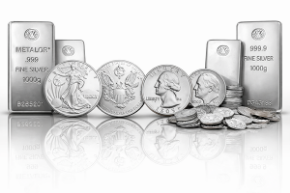
- Move your wealth into physical gold and silver, which you control directly
- Prepare before access is restricted, not after
- Build local and global resilience by getting out of fiat and into tangible assets
Secure Your Wealth with Sound Money Strategies
This is not the time for hope or denial. The financial system is being reshaped in a way that exposes your savings to greater risk. These new rules will not protect you. They will protect the institutions that failed in 2008 and nearly collapsed again in 2020.
Take action now. Preserve your financial freedom with sound money strategies built on physical gold and silver. Schedule a free consultation with one of our experts. We will help you define your goals and build a plan that secures your wealth and your future.
If you do not hold it, you do not own it. Make your move before the freeze.

