



There has been a wave of rumors circulating online about new government restrictions, Basel III changes, and even states operating outside the Federal Reserve system. Lynette Zang recently addressed several of these questions directly, cutting through speculation and clarifying what is fact and what is fiction.
Here is what you need to know.
Is the $10,000 Cash Withdrawal Reporting Rule Changing?
A common question is whether the U.S. government has lowered the long-standing $10,000 cash withdrawal reporting threshold.
According to Lynette, there is no confirmed U.S. law at this time that has officially lowered the $10,000 reporting requirement for cash deposits or withdrawals.
Yes, there have been discussions and media reports suggesting the Treasury may consider lowering that threshold in 2026. However, those discussions have not been enacted into law.
Here are the key facts:
- The $10,000 reporting rule is still in place.
- Withdrawing more than $10,000 in cash is not illegal.
- Banks are required to file reports, but that does not mean you are doing anything wrong.
- There is a paper trail if you withdraw funds and later redeposit them.
As Lynette emphasizes, until a law explicitly makes it illegal to withdraw more than $10,000, you are within your rights to access your own money. The reporting requirement exists, but it does not criminalize legal withdrawals.
Basel III Rumor: Are Banks Banned from Rehypothecating Gold and Silver?
Another rumor claims that Basel III has passed a rule banning banks from rehypothecating gold and silver beginning in 2026.
Lynette is clear: No such rule exists.
First, understand what rehypothecation means. When you deposit assets into a bank, those deposits legally become the bank’s liability. The bank can use that equity as collateral to create additional loans and leverage.
Basel III did tighten liquidity requirements, particularly around unallocated or paper gold. Physical gold held on a bank’s balance sheet may receive Tier 1 treatment, meaning it is considered a high-quality asset. But none of these changes constitute a ban on rehypothecation.
There is:
- No U.S. law
- No European regulation
- No UK rule
- No Bank for International Settlements notice
- No official Basel Committee documentation
If such a ban had passed, it would be front-page news across major financial outlets.
The confusion likely stems from the Net Stable Funding Ratio rules, which make paper gold more expensive for banks to hold. That is not the same as prohibiting rehypothecation.
However, Lynette notes something important: the fact that people believe this rumor reveals a deeper issue. Trust in the paper markets is breaking down. Investors are increasingly seeking clarity and real ownership.
And as she often says, if you do not hold it, you do not own it.
Is North Dakota Outside the Federal Reserve System?
Another claim circulating online suggests that North Dakota is the only state not part of the Federal Reserve system.
Again, Lynette sets the record straight.
North Dakota is absolutely part of the Federal Reserve system.
The confusion arises because North Dakota operates the only state-owned bank in the United States: the Bank of North Dakota. While it is state-owned and works closely with community banks, it still:
- Uses Federal Reserve payment rails
- Operates within the Fed’s clearing systems
- Falls under the Fed’s regulatory framework
Some state-chartered banks in North Dakota may choose not to be Federal Reserve member banks, but membership is optional for state banks. That does not remove the state from the Federal Reserve system.
The Federal Reserve Bank of Minneapolis oversees the entire Ninth District, which includes North Dakota.
The bottom line is simple. The Federal Reserve’s reach extends into every state.
How to Be Outside the Federal Reserve System
If you truly want to operate outside the Federal Reserve system, Lynette says the solution is straightforward:
Hold physical gold and silver in your possession.
Tangible assets that you directly control are not dependent on:
- Bank payment rails
- Central bank policies
- Counterparty risk
That is the foundation of sound money strategies.
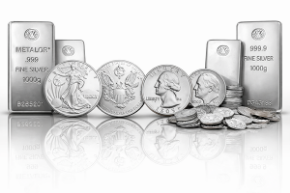
U.S. Mint Suspends Silver Sales: A Flashing Red Light
The U.S. Mint recently suspended all silver numismatic products, citing extreme price volatility and the need to review pricing.
Lynette translates that into plain English:
The Mint cannot source silver at a stable, stackable price.
When the largest sovereign mint in the world struggles to acquire metal at predictable costs, that signals real strain in the physical market.
For decades, silver spot prices have been set primarily through paper contracts:
- Futures contracts
- Derivatives
- Leveraged positions
A handful of traders could move prices without ever touching physical metal.
But when:
- Physical demand surges
- Industrial demand rises
- Investment demand increases
- Above-ground inventories shrink
The paper price begins to disconnect from reality.
The Mint does not buy paper contracts. It buys physical silver. When the physical market refuses to supply metal at paper-driven prices, sales must stop.
Lynette describes this as a structural shift in price discovery.
We saw similar stress in:
- 2008
- 2011
- 2020
- 2022
But this time, she believes the pressure is stronger.
When the physical market begins guiding price discovery, the paper market eventually follows, often violently.
Silver Is the Fuse. Gold Is the Anchor.
In times of economic instability and potential systemic change, Lynette emphasizes the distinct roles of gold and silver.
- Silver is the fuse. It tends to move first as confidence erodes.
- Gold is the anchor. It meets all the criteria for sound money and is not consumed the way silver is.
Silver is used up in industrial processes. Gold is not. That enduring stability is why gold has historically anchored monetary systems.
Together, physical gold and silver form the core of wealth preservation and economic collapse preparation.
These are not abstract theories. They are practical, time-tested sound money strategies centered on tangible assets that are universal, decentralized, and private when held directly.
The Bigger Picture: A System in Transition
What Lynette outlines is not just about rumors or temporary volatility. It reflects a larger transition.
- Trust in paper markets is eroding.
- Price discovery is shifting.
- Physical demand is asserting itself.
When stress enters the system, the truth shows up first in the physical markets.
For those seeking financial freedom and hyperinflation protection, understanding this shift is critical.
This is not about fear. It is about preparation.
Take Action Now
If you are serious about wealth preservation, economic collapse preparation, and implementing sound money strategies, it starts with real ownership.
Learn how to properly position yourself with physical gold and silver held in your possession. Understand how tangible assets can help protect your purchasing power during systemic change.
Connect with Zang Enterprises today to discover how to build a personalized strategy using physical gold and silver and take meaningful steps toward true financial freedom.

