


As the year comes to a close, Lynette Zang dives straight into what matters most right now: the extraordinary volatility erupting in the spot gold and silver markets. While headlines focus on price swings, the real story lies beneath the surface in how these markets function and, more importantly, what they reveal about the global monetary system.
This is not just about prices going up or down. It is about understanding the difference between paper contracts and physical metal, and why that distinction matters more than ever for financial freedom and wealth preservation.
Explosive Volume in Spot Gold and Silver Contracts
Lynette begins by examining options volume at the CME Group, focusing on spot gold and spot silver contracts dating back to 2018. What stands out immediately is the sheer scale of recent activity.
Both metals show massive spikes in contract volume, with silver displaying even more extreme behavior than gold. Traders have been piling into these paper contracts at unprecedented levels, often using borrowed money to do so. This leverage is a key driver of the violent price swings investors are witnessing.
Why the CME Raised Margin Requirements
To slow this speculative surge, the CME raised margin requirements. In practical terms, this means traders must put up significantly more cash to hold their contracts.
- Margin requirements were increased to $25,000 per contract.
- This forced highly leveraged traders to either add cash or sell.
- Many chose to sell and lock in profits.
This pattern is not new. Similar margin hikes occurred in 1980 and again in 2011, both times triggering sharp corrections in paper prices before the markets stabilized and moved higher.
Paper Volatility Versus Physical Reality
One of Lynette’s most important distinctions is between paper markets and physical metals.
Paper contracts are easy to buy and easy to sell. They can be moved with a click and are highly susceptible to manipulation. Physical gold and silver are different. They are tangible assets. They take time to source, deliver, and exchange. That physical constraint changes how prices behave.
This is why sharp 5 percent daily drops are common in paper markets but far less reflective of what is happening in real metal ownership.
Why This Time Is Actually Different
While many assume the current volatility will mirror past cycles, Lynette explains why this moment stands apart.
- In 1980, the world was entering a pure debt-based monetary system.
- In 2011, markets were attempting to recover from the 2008 financial crisis.
- Today, the pricing mechanism itself is shifting.
For roughly the past year, physical markets have increasingly taken over price discovery from paper markets. This transition signals a move toward a new system, where tangible assets matter more than digital promises.
A rising gold price has always been an indicator of a failing currency. The current environment of devaluation and mounting debt makes that signal impossible to ignore.
Extreme Ranges Reveal Market Stress
Silver’s recent trading range highlights just how unstable paper pricing has become. Prices surged above $80 an ounce before closing near $72 in a single session. That kind of range is historically rare and underscores how distorted paper trading has become.
Even after these pullbacks:
- Spot silver remains over 70 percent above its 200-day moving average.
- Spot gold remains more than 20 percent above its 200-day moving average.
These are not signs of weakness. They are signs of stress in a system struggling to control price signals.
Lessons From the 2008 Financial Crisis
To put today’s environment in perspective, Lynette revisits 2008.
During that crisis:
- Spot gold prices declined.
- Gold stocks declined even more.
- Physical gold collectibles rose and made new highs.
The difference was scarcity. There is a finite amount of physical gold and silver, but an infinite supply of digital contracts. That reality has not changed.
If you do not hold it, you do not own it.
Undervaluation Despite Record Prices
Even at historically high nominal prices, Lynette emphasizes that gold and silver remain severely undervalued relative to their fundamental role in the system. Wall Street optimism about endless stock market gains ignores the deeper structural issues unfolding beneath the surface.
Nothing moves in a straight line. Corrections are normal. What matters is the trend. Higher lows lead to higher highs. That principle applies not only to markets, but to preparation itself.
The Case for Sound Money Strategies
In a world dominated by central banks, exchanges, and paper manipulation, the solution is not complicated. It is disciplined.
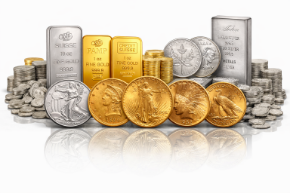
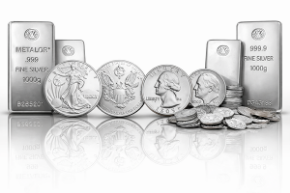
Sound money strategies focus on tangible assets that exist outside the debt-based system. Physical gold and silver are not contracts. They are not promises. They are wealth.
Lynette’s approach extends beyond metals. True wealth preservation includes food, water, energy, security, barter capability, shelter, and strong community. These are the foundations of a reasonable standard of living when systems fail.
Final Thoughts: Be Your Own Central Bank
Volatility in the spot gold and silver markets is not something to fear. It is something to understand. Paper price swings reveal fragility, not strength.
Do not be distracted by Wall Street narratives. Keep accumulating tangible assets. Focus on higher lows, long-term trends, and real ownership.
If you do not hold it, you do not own it.
Take the Next Step Toward Financial Security
Now is the time to learn how to protect yourself outside the paper system. Discover how Zang Enterprises’ sound money strategies can help you prepare for economic instability, preserve wealth, and build true financial freedom with physical gold and silver. Visit lynettezang.com to learn more and take control of your financial future today.

