


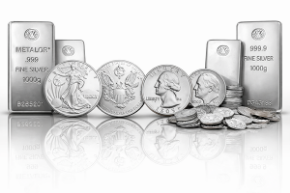

Volatility Is Spreading Across the Financial System
A lot has happened in a very short period of time.
Record debt levels in the richest countries are raising alarms as global budgets strain under rising borrowing costs. The common solution seems simple. Lower borrowing costs so we can borrow even more. But that only deepens the real issue.
The global financial system is built on constantly compounding debt. If debt growth slows, fiat currency growth slows. And when fiat growth slows, the entire system begins to strain.
That is why the question now being asked around the world is simple and direct:
Has the crisis already begun?
Millions of people are not searching for entertainment. They are searching for answers. They are looking up gold and silver volatility, crypto crashes, bank safety, inflation that will not go away, and whether the Fed has lost control.
Before a system breaks, you get warning signals. Before markets move, fear moves first.
Right now, confidence is cracking.
And when confidence begins to crack, preparation becomes power.
The First Domino: Mega Cap Weakness
On January 30, Microsoft, one of the most stable mega-cap stocks, gapped down 11 percent. That is not normal. That is a collateral event.
Technically, the 50-day moving average crossed below the 200-day moving average, a classic bearish signal. This crossover is not just about one stock. It signals broader structural stress.
When large, stable institutions begin to weaken, it sends ripples across the entire system.
And that ripple quickly spread.
Crypto: Liquidity Drains First
Bitcoin and crypto markets, already in a bear market, followed.
Crypto functions as a speculative release valve. When liquidity tightens, it drains there first. When confidence evaporates, speculation suffers.
Bitcoin’s spot price showed the same bearish crossover pattern. At one point, it was over 13 percent below the 50-day moving average and roughly 26 percent away from the 200-day moving average. For perspective, 10 percent is significant.
Crypto exchanges saw stock losses topping 55 percent amid a retail exodus. When demand disappears in a single concentrated market, prices can collapse rapidly.
Crypto, like fiat currency, depends entirely on confidence. When that confidence falters, there is no intrinsic floor.
Gold and Silver: The Canary in the Coal Mine
Gold and silver volatility is not about the metals themselves.
It is about the paper market cracking.
When you see 200-point whipsaws in gold, that is a trading market. That is the derivative structure wobbling. A derivative is simply a large, unsubstantiated bet. It cannot be converted into the underlying physical metal in most cases.
Volatility itself is not the true risk.
Counterparty exposure is the risk.
When you hold physical gold and silver in your possession, there is no counterparty. In the paper markets, there is.
And the shift is already underway.
A Structural Shift in 2025
Gold’s record run in 2025 was not speculative. It was structural.
Jewelry volumes fell 18 percent as prices rose, yet overall spending reached 172 billion dollars. Consumers did not abandon gold. They shifted from jewelry to bars, coins, and even ETFs.
In China and India especially, demand moved toward physical forms of gold.
For the first time ever, bar and coin demand surpassed jewelry consumption in China. Chinese bar and coin demand broke the 2013 record.
That is not about trading.
That is about returning to gold’s monetary roots.
Western investors largely bought ETFs, which are paper contracts representing a share in a trust. You do not have access to the underlying metal. Wall Street can influence visible prices through ETF flows.
But the physical market tells a different story.
Bar and coin buying reached a 12-year high. That is the public accumulating tangible assets.
Central Banks Knew First
This shift did not begin with consumers.
It began with central banks.
From 1990 to 2000, central banks sold and leased gold, suppressing visible prices. By 2005, they reversed course. By 2010, they were net buyers.
Notably, 2005 was three years before the 2008 crisis became obvious to the public.
Today, central banks are buying more gold than at any time in modern history. In 2025 alone, 22 institutions reported increases in gold reserves of one ton or more.
Central banks are the quiet accumulators.
Now the public is following.
Silver: The Fuse Is Burning
Silver lease rates recently hit their highest levels since 2008, and even exceeded 2008 premiums.
Lease rates represent the cost to borrow silver. When those costs spike, it signals stress.
Silver is the fuse.
When confidence declines, exchanges intervene. The CME raised margin requirements multiple times in late 2025 and early 2026. The first hike increased gold margins by 33 percent and silver by 36 percent. There were double hikes within a single week.
The CME rarely raises margins twice in one week unless volatility is extreme and vulnerability is high.
Each margin hike triggered immediate selloffs. Silver fell roughly 8 percent. Gold fell about 5 percent.
That is not stability.
That signals strain.
Paper Markets vs Physical Markets
FDIC data shows a sharp increase in gold and silver derivatives trading within insured banks. These are contracts, not physical metal.
Paper contracts make it easier to influence visible price.
But the transition is happening.
The physical markets are increasingly dictating reality.
Spot silver remained significantly above its 50-day and 200-day moving averages, even after sharp pullbacks. Silver was roughly 75 percent above its 200-day moving average at one point. Gold remained nearly 10 percent above its 50-day and over 29 percent above its 200-day moving average.
Overbought does not mean overvalued.
The fundamentals in both gold and silver remain strong.
And Lynette Zang emphasizes this clearly: gold and silver are not trades. They are stabilizers. They are wealth preservation tools.
The Real Question
The question is not:
Did I miss the trade?
The real question is:
What role does gold play in my portfolio?
Gold acts as an anchor. Silver acts as a warning signal. Both function as tangible assets outside the debt-based fiat system.
As volatility spreads from mega-cap stocks to crypto, from derivatives to margin hikes, one thing becomes clear:
Confidence is fragile.
And when confidence breaks, paper claims can evaporate quickly.
Keep Accumulating While You Can
There are voices saying sell silver. Sell now.
Lynette Zang’s position is clear.
No.
Keep accumulating.
Take advantage of the opportunities while they still exist. There may come a point when those opportunities disappear.
This is not about speculation. This is about economic collapse preparation. This is about implementing sound money strategies using physical gold and silver.
When the transition from paper control to physical pricing completes, those holding tangible assets will be positioned differently than those holding contracts.
Preparation is power.
If you are serious about wealth preservation, financial freedom, and protecting yourself from systemic risk and hyperinflation, now is the time to act.
Learn how Zang Enterprises can help you implement sound money strategies with physical gold and silver. Prepare while the opportunity is still in front of you.

