



China’s Banking Collapse Signals the Global Endgame for Fiat Money
The unfolding banking crisis in China is a clear demonstration of what happens when a debt-based financial system reaches its limit. The recent wave of rural bank failures, forced mergers, and growing public mistrust in financial institutions are not isolated events. These are signs of a deeper global problem.
This is not just a Chinese issue. It reflects growing systemic instability that spans across countries and currencies. The collapse of trust in fiat money and the institutions that support it is accelerating. Now is the time to act using sound money strategies.
China’s Rural Banking Crisis Is Not a Solution
In early 2024, China began merging more than 2,100 rural banks in an attempt to contain mounting financial risk. Officials presented this as a solution. In reality, it signals growing desperation.
Bank failures such as Jangxi Bank, combined with the disappearance of 40 banks in a single week, point to deep structural weakness. Some institutions reported that up to 40 percent of their loan portfolios were non-performing. With rising interest rates pushing asset values underwater, these banks are being forced to sell at steep losses.
Merging smaller banks into larger ones does not eliminate risk. It concentrates it.
Liquidity Injections Lead to Currency Devaluation
The response from China’s central bank has followed the global playbook. Stimulate the economy by injecting liquidity, lower interest rates, and increase consumer spending. While this may delay collapse, it comes at a steep cost.
Mass money printing devalues the existing currency. What appears to be economic stimulus actually erodes purchasing power. This is a short-term fix with long-term consequences. It is happening in the United States and other major economies as well.
Eventually, currency devaluation becomes impossible to ignore. By then, those who have not protected themselves are left vulnerable.
Growing Public Demand for Gold Signals a Shift
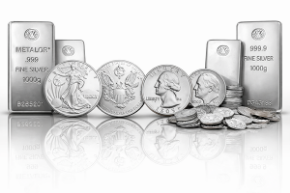
As confidence in fiat currency continues to deteriorate, individuals are turning to physical gold and silver. These hard assets are gaining traction among younger generations and experienced savers alike, from China to the United States.
Physical gold and silver are the only financial assets with no counterparty risk. They cannot be inflated, defaulted on, or manipulated by political decisions. They preserve purchasing power and offer real financial independence when the traditional system breaks down.
China’s central bank added 735 tons of gold to its reserves last year, the highest annual total since at least 1977. This gold does not leave the country. The move is deliberate, and it is strategic.
Trust Once Lost Is Rarely Recovered
Banking collapses are not only financial events. They are crises of confidence. When trust in the system fails, it is almost impossible to restore.
In China, widespread protests have erupted as customers demand access to frozen funds. These scenes highlight the fragility of faith in financial institutions. Similar risks exist globally. In the United States, recent fintech failures have left millions locked out of their accounts.
Assets held inside the digital financial system can be frozen, restricted, or erased instantly. Holding tangible wealth outside of the system is a critical safeguard.
The U.S. Is on a Similar Path
Banking consolidation is not unique to China. The U.S. financial sector has seen a sharp decline in the number of independent banks. In 1983, the country had over 14,000 banks. By 2023, that number had dropped to just over 4,100. Although the number of branches initially increased, physical banking is now being phased out in favor of digital platforms.
As larger banks absorb smaller ones, financial control becomes more centralized. Consumers are left with fewer options and limited access to face-to-face service. When problems arise, there is often no one to contact and no branch to visit.
This creates a dangerous environment in which individuals lose control over their money.
Government Bonds Are Not a Safe Haven
In China, investors seeking safety have poured into government bonds, pushing prices up and yields down. At first glance, this appears to be a rational move. In truth, it reflects misplaced trust.
Government bonds are still backed by fiat currency. Central banks can print unlimited amounts to service this debt, which only accelerates currency devaluation. Holding debt in a debt crisis is not a solution. It is a trap.
Sound money, not promises of repayment, is what preserves wealth in times of crisis.
The Global Debt System Is Nearing Collapse
A structural shift is underway in the global bond market. This market underpins every other financial asset. As it begins to fail, the rest of the financial system becomes increasingly unstable.
History has shown how financial collapses occur. They begin slowly, then unravel rapidly. The current environment mirrors previous end-of-cycle periods where fiat systems failed and hard assets prevailed.
With gold outperforming most asset classes in the first half of the year, the market is already signaling what lies ahead.
Those who take steps now to prepare with physical gold and silver will be positioned to protect their wealth when the next phase of this collapse unfolds.
Call to Action
The global financial system is changing rapidly. Secure your wealth and purchasing power through sound money strategies based on physical gold and silver.
Zang Enterprises provides expert guidance to help you prepare for systemic shifts and preserve your financial freedom. Contact a strategy specialist today.

