


Wall Street Soars While Fundamentals Shatter
Recent headlines celebrating record-breaking equity trading and surging speculative stocks may seem like signs of economic strength. In reality, they point to something far more dangerous: an accelerating detachment between market valuations and real economic productivity.
As banks celebrate profits from trading activity, broader risks are ignored. Speculative corners of the stock market are booming not because of strong fundamentals, but due to anticipation of Federal Reserve rate cuts. This is an old strategy that has failed to repair the system for more than five decades.
This is not sustainable growth. It is artificial inflation of paper wealth, designed to delay the collapse of a system built on debt.
Debt Has Reached Exponential Levels
Since the United States fully abandoned the gold standard in 1971, the economy has become entirely dependent on debt. Every recession has triggered more borrowing, and the rate of debt expansion has now reached exponential proportions.
This debt spiral erodes the purchasing power of fiat currency. The price of goods rises not because they have more intrinsic value, but because the currency used to buy them is worth less. A banana remains a banana, whether it costs 10 cents or 20 dollars. The difference lies in the collapsing value of the dollar.
Markets Detached from Economic Reality
The gap between the stock market and GDP has never been wider. From 1970 through the late 1990s, market performance generally mirrored real economic output. That relationship broke down after the dot-com bubble. Today, valuations are completely disconnected from underlying productivity.
This is especially evident in the S&P 500. While the index is up over 177 percent this year, nearly all of that growth is driven by just seven stocks. The remaining 493 companies are in an earnings recession, a reality hidden when investors rely only on index performance.
ETFs Pose Hidden Liquidity Dangers
Most major ETFs such as SPY, QQQ, and VTI are heavily concentrated in the same high-performing tech stocks and hold virtually no cash. This creates a serious risk. If investors try to exit en masse, these funds lack the liquidity to meet redemptions. In such scenarios, redemptions can be halted, trapping investors in rapidly declining assets.
Despite this structural weakness, retail investors continue to pour into these products, unaware of the dangers beneath the surface.
Insiders Are Selling While the Public Buys
While retail investors celebrate artificial gains, corporate insiders are selling. Meta’s Mark Zuckerberg has sold nearly half a billion dollars in stock in recent months. Jeff Bezos plans to unload 5 billion dollars in Amazon shares. These are not casual transactions. These are strategic exits.
Wall Street continues to push the narrative of an AI-driven bull market. The pattern is strikingly similar to the late 1990s when internet hype fueled unsustainable growth before the inevitable crash.
Overvaluation Has Reached Historic Extremes
Today’s market is the most overvalued in history. It surpasses the peaks of 1999 and even 1929. Eight of the top ten companies by market capitalization are tech giants. Together, they make up 35 percent of the index’s total value but only 23 percent of earnings. This imbalance increases risk for every investor tied to the broader market.
Even mainstream analysts are now issuing warnings. Recent commentary from CNBC compared current investor behavior to rats fleeing a sinking ship.
Gold: The Underappreciated Safe Haven
Spot gold has reached new highs, recently hitting 2,460 dollars, yet it remains undervalued compared to its fundamentals. Gold continues to outperform the S&P 500, despite being sidelined in mainstream financial discussions.
Mining stocks have underperformed, acting more like regular equities than tangible assets. They do not provide the same level of security as physical gold and silver, which have been the foundation of sound money for thousands of years.
At the same time, the bond market is undergoing a structural shift. Bonds no longer serve as a reliable hedge. Gold is beginning to take that role.
Hyperinflation Hides Behind Market Gains
In countries like Venezuela, stock markets appeared to boom even as currencies collapsed in value. For a time, Venezuela was home to the best performing stock market in the world. But hyperinflation destroyed the real value of those gains. A trillion times zero is still zero.
Financial assets built on fiat money will follow the same path if purchasing power continues to erode. Real wealth is preserved through tangible assets that hold intrinsic value.
The Path Forward Requires Diversification and Community
Protecting wealth today requires more than diversification within the financial system. It demands a transition away from fiat-based financial products and toward assets that cannot be inflated away. A resilient strategy includes:
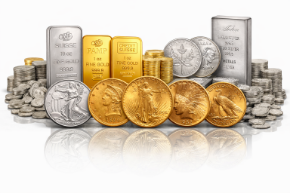
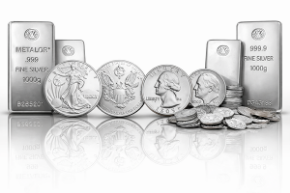
- Physical gold and silver
- Food, water, and energy security
- Barterable goods
- Secure shelter
- Community relationships and local self-sufficiency
Community is critical. Relationships built through farmers markets, local meetups, and neighborhood networks help provide support, resources, and security. A resilient portfolio and a strong local network are essential in today’s shifting landscape.
A Peaceful Transition to Sound Money
A global transition is underway. The financial system is changing rapidly. Individuals must act now to preserve their freedom and protect their wealth.
One of the most powerful steps is converting fiat currency into sound money. Physical gold and silver are not speculation. They are protection. They are independence.
Take the Next Step
Now is the time to act. Learn how Zang Enterprises can help you build a resilient, diversified portfolio rooted in sound money strategies. Discover how physical gold and silver can secure your financial future as the current system continues to fracture. Begin protecting your wealth today.

