

Every Generation Faces a Reset
What if every generation faces a currency reset and another one is now approaching?
Emerald Fox takes us on a journey through history, from ancient empires to modern nations, revealing a pattern governments hope you never notice. Fiat currency always fails. When it does, everyday people lose their savings, purchasing power, and financial security. Meanwhile, those who prepare with tangible assets like physical gold and silver emerge stronger.
This is not speculation. It is documented history repeating itself.
What Is a Currency Reset?
A currency reset occurs when the rules of money change. It often happens suddenly and always benefits governments at the expense of citizens.
Resets typically occur in four main ways:
- Currency devaluation: Purchasing power is slashed overnight, as seen in Mexico in 1993 when the peso lost half its value.
- Ending gold or hard asset backing: Currency becomes backed only by government promises, such as the United States in 1971 when Nixon ended the gold standard.
- Hyperinflation through money printing: Excessive currency creation destroys value, as seen in Zimbabwe’s hundred trillion dollar notes.
- Redenomination resets: Zeros are removed from bills to mask the problem without fixing it, like Venezuela erasing five zeros in 2018.
Every reset shares two outcomes. Governments gain temporary relief. Citizens lose savings. History consistently shows that those holding tangible assets preserve their wealth.
Rome: Debasing the Denarius
Ancient Rome offers one of the earliest examples of a currency reset. Rome’s economy relied on the silver denarius, once nearly pure silver. As the empire expanded, wars, armies, and lavish spending became too costly.
Instead of raising taxes or cutting spending, emperors debased the currency by mixing silver with copper. By the third century, the denarius contained less than 5 percent silver.
The coin looked the same, but markets were not fooled. Prices surged, trade collapsed, and inflation hollowed out the economy. Those who held gold and silver carried their wealth through Rome’s decline.
Weimar Germany: Printing to Hyperinflation
After World War I, Germany faced crushing reparations. The government chose to print money rather than address the debt.
By 1923, hyperinflation took hold. A loaf of bread that cost one mark in 1919 soared to 100 billion marks. Cash became so worthless it was used as wallpaper. Wheelbarrows of money were stolen for the wheelbarrow, not the cash.
Families who held gold survived. A few gold coins could still buy food, shelter, and property. Gold did not just preserve wealth. It preserved life.
The United States 1971: The Birth of Pure Fiat
Even the world’s strongest economy is not immune to resets. After World War II, the US dollar became the global reserve currency because it was backed by gold.
By the 1960s, overspending on wars and social programs led foreign nations to demand gold in exchange for dollars. In 1971, President Nixon ended dollar convertibility to gold.
Overnight, the dollar became pure fiat currency.
Since then, the dollar has lost over 85 percent of its purchasing power. What cost $1 in 1971 costs more than $7 today. Gold rose from $35 an ounce to over $3,600, clearly demonstrating why sound money strategies endure while fiat currency fails.
Venezuela: Erasing Zeros While Inflation Explodes
Venezuela provides a modern example of a reset happening in real time. By 2018, inflation reached 32,714 percent.
That means a $1 item at the beginning of the year cost over $327 by year’s end. Groceries costing $100 would balloon to more than $32,000.
The government erased zeros, changed bill colors, and printed larger notes. None of it worked. Savings vanished. Families could not afford food.
Gold told a different story. An ounce of gold rose from about 2,400 bolivars in 2010 to nearly 394 million bolivars by 2020. Gold did not just survive. It multiplied in value.
Hungary and Zimbabwe: Collapse at Lightning Speed
Hungary in 1946 experienced the worst hyperinflation on record. Prices doubled every 15 hours. Workers were paid in the morning only to find their wages worthless by evening. Barter returned. Only gold retained value.
Zimbabwe repeated the pattern in the 2000s, issuing 100 trillion dollar notes that could not buy lunch. Citizens turned to barter, foreign currencies, and gold to survive.
A Pattern Too Clear to Ignore
These examples are not isolated events. Argentina, Brazil, Turkey, Greece, Russia, and even the United States during earlier wars have all faced resets.
Today’s warning signs are flashing:
- Over $35 trillion in US debt
- Central banks testing digital currencies
- Inflation that appears controlled on paper while living costs keep rising
History shows it is not a matter of if, but when.
Gold and Silver: Lifeboats Through Every Storm
Every generation learns the same lesson. Fiat currency fails. Precious metals endure.
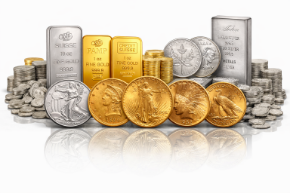
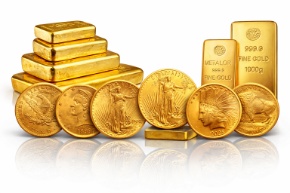
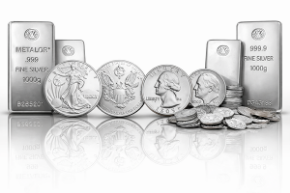
Gold and silver are not outdated relics. They are lifeboats that carry wealth through economic collapse, hyperinflation, and monetary resets. Holding tangible assets with no counterparty risk has protected families for centuries.
You do not need to predict the timing of the next reset. You need to prepare.
What You Can Do Now
Preparing means holding a portion of your wealth in physical gold and silver as part of a sound money strategy. Even a modest beginning can make a meaningful difference.
Paper wealth can disappear overnight. Tangible assets endure.
If you have not taken the first step, now is the time. Connect with a Zang Enterprises strategy specialist to learn how sound money strategies using physical gold and silver can help protect your purchasing power, your freedom, and your family’s future.
Do not wait until the reset hits to learn the lesson the hard way.

