

Gold and silver do not surge in a vacuum. When spot markets move sharply, it is often the market’s way of whispering what policy makers refuse to say out loud: confidence is slipping.
In this interview, Lynette Zang is joined by filmmaker Christopher Dodge, creator of the upcoming documentary Money Disrupted (which features Lynette along with many other voices). Together, they connect today’s market volatility to the deeper issue Dodge calls the “final gasp” of the fiat money system. Their message is clear and practical: the Federal Reserve’s ability to print “unlimited” money does not stabilize the system forever. It ultimately destabilizes the dollar.
And that has consequences for every household.
Gold and Silver Surging: A Signal of Late-Stage Fiat Risk
From Christopher Dodge’s perspective, the push in precious metals reflects rising risk factors in the U.S. dollar itself. He frames the move as a warning, not a celebration.
He also argues that the usual political playbook cannot solve the problem, because promises to spend more collide with an already debt-heavy system. In his view, the path of least resistance becomes the path the system takes: lower rates, expand money supply, and print at volumes we have not seen before.
Lynette’s focus stays anchored on what this means in real life. When people hear “lower rates,” many assume it just means cheaper borrowing. But in this conversation, the point is sharper:
Lower rates can also mean more money creation, more inflation pressure, and a further decline in purchasing power.
Why Lower Rates Do Not “Help” the Average Person
Dodge breaks this down with a wealth inequality lens.
- Those who already hold assets can benefit as asset prices inflate.
- Those who do not hold assets often experience the downside: rising prices everywhere.
He ties the inflation impact to everyday life: the costs of goods continue to climb, and housing affordability deteriorates further. He views home prices as a reflection of inflation and money printing, especially when the average person is already priced out in many markets.
Lynette adds the core truth most people miss:
Inflation is a form of confiscation. It is a wealth transfer.
When inflation accelerates, it stops being an abstract economic term and becomes a daily crisis. People are not just struggling to buy homes. They are struggling to feed their families.
Why “Money Disrupted” Was Created
Dodge explains that Money Disrupted grew out of earlier work on a crypto-focused documentary (about the SEC’s actions). While researching the monetary system, he concluded that “follow the money” leads to the biggest source of money: the Federal Reserve.
He describes how even educated professionals around him struggled to explain what the Fed actually is. Some assumed it was simply “the federal government.” Dodge pushes back hard on that misunderstanding and argues the real issue is structural:
The government can finance itself through an “unlimited money printer,” and that mechanism benefits elites far more than the average person.
He ties this to lobbying and special interests, describing a cycle where money flows first to those closest to the source, and only later reaches everyone else, after it has been diluted. The public experiences the dilution as rising prices.
From Gold to Fiat: The Visual Story That Changes Everything
One of the most powerful moments Dodge describes is the documentary’s visual progression:
physical gold → gold certificates → gold-backed dollars → dollars backed by nothing
He connects this to modern examples of currency collapse, referencing countries like Venezuela and Zimbabwe as case studies the documentary uses to illustrate what happens when systems buckle under their own weight.
He also uses a metaphor that lands with force: Monopoly money has value only inside the game because everyone agrees to pretend it does. Outside the game, it has no value. In his view, the dollar functions the same way. It is not valuable because it is redeemable. It is valuable because the system demands its use.
Even Congress Didn’t Know We Left the Gold Standard
Dodge shares stories from his interview with Ron Paul that expose a deeper problem: a lack of monetary understanding even inside government.
One example: a congressperson in the 1990s reportedly believed the U.S. was still on a gold standard. Ron Paul told them the U.S. had not been on a gold standard since 1971, when Nixon took the country off it through executive action.
Lynette uses this moment to highlight what the public often overlooks:
- The bill says “Federal Reserve Note.”
- A note is a debt instrument.
- And, as Lynette states in this interview, the Federal Reserve is a private corporation.
Her conclusion is blunt: what people work for, save, and store as “money” is ultimately corporate debt.
That is a major mental shift. And it explains why so many people feel like they can do everything right and still fall behind.
The Dollar’s Purchasing Power and the Compounding Cost of Living
Dodge explains that the documentary pulls from the Federal Reserve’s own data sources, including charts that show long-term dollar purchasing power erosion. He describes it as nearing “a goose egg,” pushing toward effectively nothing.
To make inflation real, the documentary uses time-based comparisons:
- Consumer Price Index trends
- Average cost of a house
- Average cost of a car
- Average cost of a cup of coffee
The pattern they emphasize is simple: during major money-printing eras, prices rise dramatically over time.
They also discuss gold’s long-term role as a store of value, including a comparison that looks at how many ounces of gold were required to buy a home in the early 1960s versus what that same amount of gold could represent decades later. Dodge is careful to say he is pulling those figures from memory and that the documentary contains the correct numbers, but the takeaway is clear:
Gold, in their view, outpaces inflation and can outpace housing values over long cycles.
He also challenges the “stocks always win” narrative by arguing that when inflation is properly considered, broad index performance can look far less impressive than people assume.
Lynette adds another uncomfortable layer: it is “genius” in a dark way to inflate asset prices and then tax the inflated gains.
The Housing Trap: Why a Home Can Become a Liability
Housing is a major focus because it touches nearly everyone.
Dodge argues that in the first many years of a standard mortgage, a house often does not behave like a wealth-building asset due to:
- Front-loaded interest
- Taxes, insurance, and sometimes PMI
- Minimal early principal reduction
He points out that many homeowners do not stay in a mortgage long enough to build meaningful equity, noting that the average mortgage duration can be far shorter than the full 30-year term.
The deeper point is about purchasing power. If the home price rises but the currency’s value falls, the owner may not actually be gaining real wealth. They may be running in place while the banking system benefits most from the structure.
Protecting Yourself Before the Reset: Sound Money Strategies and Real-World Action
Dodge says he does not want the documentary to be pure doom. The second half aims to explore solutions, and he repeatedly returns to personal responsibility:
- Reduce unnecessary liabilities
- Build financial health
- Hold assets rather than living inside the debt system
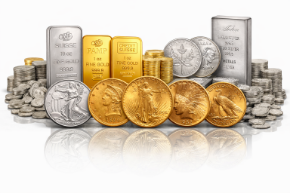
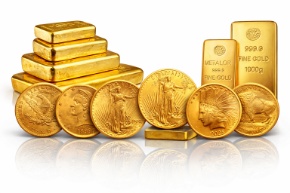
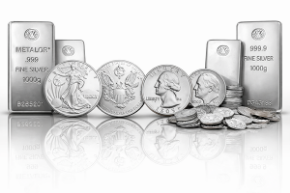
He strongly advocates for precious metals, emphasizing gold and silver’s long history as recognized value across time and borders. He references a point made by another interviewee: a genuine gold coin, minted by any trusted source, can carry value anywhere in the world.
He also shares an example of nations that would not accept each other’s currencies, but would accept U.S. dollars or precious metals for trade. The implication is uncomfortable: even when trust between currencies collapses, gold still clears transactions.
This aligns directly with the sound money strategy Lynette teaches: tangible assets that are not someone else’s liability.
“What Can You Control?” The Stoic Question That Cuts Through the Noise
Near the end, Dodge offers a framework that Lynette reinforces: stop getting consumed by what you cannot control.
Politics, central bank decisions, and macro headlines can easily hijack attention. But Dodge says the most important question is personal:
What are you doing to secure your financial future?
He encourages viewers to:
- Focus on controllable actions
- Research assets and solutions thoroughly
- Implement changes in small, consistent steps
He also argues that true sound money requires limits and discipline, not endless “free stuff.” It means living within budgets, placing restrictions on spending, and removing the ability to fund everything through a printer.
Redeemable Gold and Accountability: Taking Back Public Power
Lynette expands the conversation beyond individual benefit and into generational responsibility.
She argues that if people only think about themselves, it becomes a divide-and-conquer mechanism. Her focus is on what tool the public could use to reclaim a voice in how money is created and spent.
Her answer is direct:
Bring redeemable gold back into the system.
In her view, redeemability forces accountability. It becomes a check on unlimited spending because money creation can no longer be separated from tangible constraints. She emphasizes that this is bigger than one person and frames it as a generational mission: for children, grandchildren, and those not born yet.
Community, Self-Reliance, and the Freedom to Say “No”
This interview does not treat “wealth preservation” as only a portfolio problem. Lynette brings it back to resilience:
- Food
- Water
- Energy
- Security
- Barterability
- Shelter
- Community
She explains that local community can be built anywhere, even in a major city, through small acts: meeting growers at farmers markets, learning skills, contributing time, creating relationships, and giving first.
Both Lynette and Dodge warn about the risk of a fully surveilled money system. If everything you have is intangible inside the system, and the system demands compliance, you lose your choices. Their definition of financial freedom includes both sound money and self-reliance, because together they create options.
Final Takeaway: A Movement Requires Education, Action, and Unity
Dodge closes with a reminder that Money Disrupted is not made by a major studio. It is built by a small team driven by passion and purpose, trying to bring together voices across different “sound money” communities. He expects viewers will not agree with everything in the film, and he sees that as healthy.
Discourse matters. Education matters. And action matters most.
Because the system feels rigged for a reason, and pretending it is fine does not make it safer.
Learn About Zang International Sound Money Strategies
If this conversation resonated with you, do not stop at awareness. Awareness without action is how people stay trapped inside a system designed to dilute their purchasing power.
Now is the time to strengthen your foundation with sound money strategies rooted in tangible assets, including physical gold and silver, so you can pursue financial freedom and long-term wealth preservation in an increasingly unstable monetary environment.
Explore how Zang International helps individuals prepare for systemic risk, inflation, and economic collapse preparation by building resilience with real money and real-world strategies.

