


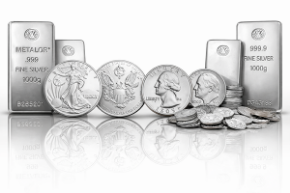

Gold and Silver Volatility Is Not What It Seems
Lynette Zang opens the new year by addressing what has many investors unsettled: extreme volatility in gold and silver prices. These sharp moves are happening in the spot markets, not because the metals are suddenly unstable, but because of unprecedented activity in paper contracts.
What matters most right now is understanding the difference between paper-driven price swings and what is happening in the physical markets beneath the surface.
CME Contract Surges and Artificial Volatility
Looking at CME Group data, Lynette highlights a dramatic spike in options volume for both spot gold and spot silver. Trader participation has surged to levels not seen in decades.
This is not organic price discovery. It is contract-driven speculation.
Much of this activity is fueled by leverage. Traders borrow to buy contracts, amplifying price movements. When the CME raises margin requirements, as it did recently, traders are forced to come up with more cash or liquidate positions.
This is exactly what happened:
- CME raised margin requirements by $5,000 per contract
- Traders took profits to meet new capital requirements
- Prices pulled back sharply in the paper markets
This same mechanism appeared in 1980 and again in 2011. In both cases, margin hikes temporarily pushed prices down before resuming the broader trend.
Why This Time Is Different
While the mechanics look familiar, Lynette emphasizes one critical difference.
The physical markets are now taking over price discovery.
In 1980, the world was entering a pure debt-based system.
In 2011, markets were recovering from the global financial crisis.
Today, the system itself is transitioning.
Since January of last year, physical gold and silver demand has increasingly driven real pricing, especially outside the United States. This marks a structural shift away from paper dominance and toward tangible assets.
Rising gold prices are not speculation. They are a signal of currency failure and accelerating devaluation.
Paper Markets vs Physical Metal Reality
Paper markets are easy to manipulate. Contracts can be bought and sold instantly with a click.
Physical metals are different.
Gold and silver that must be mined, refined, transported, and delivered cannot be created out of thin air. That difference becomes critical during periods of stress.
Even after recent pullbacks:
- Gold remains more than 20 percent above its 200-day moving average
- Silver remains over 70 percent above its 200-day moving average
These are historically extreme levels, yet Lynette is clear: both metals remain severely undervalued relative to their fundamental value.
Volatility does not mean instability. It reflects tension between a failing paper system and rising physical demand.
Silver’s Historic Trading Range
Silver’s recent trading range is unlike anything seen before 2020. Prices surged above $80 an ounce before closing significantly lower in the same session.
This wide range does not indicate weakness. It exposes how disconnected paper pricing has become from physical reality.
Even at $80 silver remains undervalued.
The same is true for gold, even at levels above $4,300 per ounce.
Lessons From the 2008 Financial Crisis
Lynette revisits a chart she created during the 2008 crisis comparing:
- Spot gold prices
- Gold mining stocks
- Physical collectible gold
During that crisis:
- Spot prices fell
- Mining stocks fell even harder
- Physical collectible gold rose and made new highs
Why?
Because physical supply is finite. Paper supply is infinite.
That lesson still applies today. If you do not hold it, you do not own it.
Higher Lows Matter More Than Headlines
Markets never move in straight lines. They bounce.
What matters is direction:
- Higher lows lead to higher highs
- Lower highs lead to lower lows
Ignoring Wall Street narratives and focusing on long-term trends is essential for wealth preservation.
Volatility is noise. Accumulation is strategy.
Sound Money Strategies in a Failing System
Lynette makes her position clear. She is comfortable holding physical gold and silver while paper institutions battle for control.
Sound money strategies are about more than price. They are about:
- Wealth preservation
- Liquidity when needed
- Barter ability
- Financial freedom outside centralized systems
Physical gold and silver sit at the center of that strategy.
Key Questions Answered
Are pre-1933 territorial and fractional gold considered collectible?
Yes. These are classified as collectible gold. If it cannot be held inside an IRA, it is considered collectible rather than monetary gold.
Should silver be converted to gold at a 56:1 ratio?
It depends entirely on individual goals and holdings. Lynette advises speaking directly with a strategy specialist before making any conversion.
Why do Asian markets push prices up while U.S. markets suppress them?
Asian markets are more focused on physical gold and silver. U.S. pricing has been dominated by paper contracts. That dynamic is now changing as physical markets regain influence.
Practical Guidance on Physical Metals
Tarnish, also known as toning, does not reduce silver’s value. Do not clean coins.
Lynette also explains tools like Glint, which allows gold-backed liquidity for transactional use, and arbitrage, which involves buying assets where they are undervalued and selling where they are priced higher.
These tools support flexibility within a broader physical strategy, not speculation.
The Bigger Picture
This is not just about metals. It is about preparing for economic collapse, hyperinflation, and systemic resets that have played out repeatedly throughout history.
The transition away from paper control toward physical price discovery is already underway.
Those who understand it will be positioned very differently than those who do not.
Take Control of Your Financial Future
Gold and silver volatility is not a warning to exit. It is a signal to understand what is really happening beneath the surface.
Now is the time to learn how sound money strategies using physical gold and silver can help protect your wealth, preserve purchasing power, and prepare you for the next phase of this global monetary transition.
Visit Zang Enterprises to speak with a strategy specialist and learn how to build a personalized plan centered on tangible assets, financial freedom, and long-term wealth preservation.

