



Introduction
In this LIVE Q&A, Lynette Zang returns with major updates, tackling critical questions about the global financial system, physical gold and silver, and how individuals can protect their wealth in uncertain times.
From understanding the risks of paper markets and cryptocurrencies to preparing for a currency reset, this session delivers clear, actionable insights rooted in sound money strategies and real-world financial experience.
Below is a complete breakdown of each audience question and Lynette Zang’s response.
Q1: “What specifically should I buy? Gold coins or what? So I’m protected.”
Lynette emphasizes that there is no one-size-fits-all answer.
- Every strategy must be customized to the individual
- It depends on:
- Financial goals
- Current assets
- Risk exposure
- Future needs
The core principle is to create a comprehensive, personalized plan based on a full financial picture.
Generic advice like “buy this” or “stack that” ignores the reality of currency life cycles. Lynette stresses that true protection comes from education and tailored planning, not blanket recommendations.
Q2: “How can COMEX have one ounce of silver when there’s been $10 arbitrage for months?”
Lynette explains that the confusion comes from misunderstanding the system:
- COMEX is primarily a paper contract market
- Contracts can represent large amounts of silver without physical backing
- These markets are used to:
- Rehypothecate assets
- Suppress visible prices
- Transfer risk to the public
The key takeaway:
Paper markets do not reflect true physical supply and demand.
Q3: “Are crypto and Bitcoin risky compared to physical metals?”
Lynette and Kenneth agree:
- Crypto has always been risky, not just recently
- It is intangible and vulnerable to:
- Technological risks
- Institutional control
- System manipulation
Lynette describes cryptocurrencies as a “Trojan horse” designed to transition the system into a fully digital financial structure.
In contrast:
- Physical gold and silver:
- Cannot be hacked
- Exist outside the system
- Provide true ownership
Q4: “Can the government take my gold in a vault like Brinks?”
Yes, it is possible.
Key distinctions:
- Private vaults in your name offer more protection
- If you don’t hold it directly, you don’t fully control it
Lynette highlights the importance of:
- Ownership structure
- Legal classification
- Jurisdiction
She personally favors pre-1933 gold coins, which historically fall under a different classification and may offer additional layers of protection.
Q5: “How much could gold buy during the Great Depression?”
Lynette explains:
- Gold was fixed at $20 per ounce before confiscation
- A family could live on one income (~$800 annually)
Today:
- Wages are higher in dollars, but lower in gold terms
- Purchasing power has significantly declined
Example:
- A $1 gold coin (1/20 oz) once bought 11 loaves of bread
- Today, $1 in fiat buys a fraction of that
Gold preserves purchasing power. Fiat currency does not.
Q6: “When will this ‘kicking the can’ financial system end?”
Lynette confirms:
- Yes, it is simple math
- The system ends when:
- Purchasing power is exhausted
- Confidence collapses
Central banks can continue printing, but:
- The system relies on confidence
- Once confidence is lost, the shift accelerates rapidly
She warns that confidence indicators are already weakening, signaling that the system is nearing its limits.
Q7: “What strategy applies if I have no debt?”
If debt is not a concern, the strategy shifts to:
- Income-producing assets
- Legacy planning
- Wealth preservation
The approach depends on:
- Age
- Family structure
- Long-term goals
Again, Lynette reinforces:
Every strategy must be customized.
Q8: “How do I explain financial collapse risks to younger people?”
Lynette recommends:
- Start with simple, short educational tools
- Focus on:
- What money is
- Loss of purchasing power
Effective tools include:
- Short videos
- Visual charts from the Federal Reserve
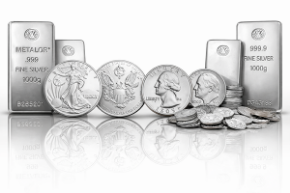
- Real-world examples like silver coins vs modern currency
The goal is to let people see the truth for themselves.
Q9: “How can I prepare if I can’t afford gold?”
Lynette provides practical guidance:
- Start small:
- Even one ounce of silver is a beginning
- Use existing assets:
- Sterling silver items
- Gold jewelry
- Develop barterable skills:
- Cooking
- Trades
- Services
- Build community networks
Preparation is not just about metals. It is about self-sufficiency and resilience.
Q10: “Is hyperinflation already happening?”
Lynette believes:
- Early stages of hyperinflation are already underway
- It is not yet at official levels (50%+), but trends are clear
Key signals:
- Rising costs (fuel, essentials)
- Declining confidence
- Increasing money velocity
Once confidence breaks, hyperinflation can accelerate quickly.
Q11: “Should I hold stocks or only gold and silver?”
Lynette’s perspective:
- Stocks, bonds, and crypto are:
- Overvalued
- Intangible
- Dependent on fiat conversion
- Gold and silver are:
- Undervalued
- Tangible
- Outside the system
Her strategy:
- Hold the majority in undervalued tangible assets
- Limit exposure to overvalued paper assets
Q12: “What happens to mortgages during a reset?”
Lynette explains:
- Governments may:
- Tie mortgages to inflation
- Reset loan terms
- Shift fixed rates to variable rates
The strategy:
- Use gold to pay off fixed-rate debt during revaluation
- Avoid being trapped in restructuring
Preparation ensures you are not at the mercy of the system.
Q13: “Who will buy gold when it reaches true value?”
There will always be buyers.
Gold is used in:
- 33 global sectors
- Monetary systems
- Industry
Unlike fiat currency, gold has:
- Intrinsic demand
- Finite supply
This ensures ongoing liquidity and value.
Q14: “Are credit unions safer than banks?”
Lynette warns:
- Credit unions are still connected to the banking system
- Insurance coverage is limited:
- Roughly 1% backing for deposits
In a systemic crisis:
- Coverage may not be sufficient
- Access to funds could be restricted
This reinforces the need for tangible asset diversification.
Q15: “Should I buy gold or silver with $1,000?”
Answer: Both.
- Gold:
- Primary currency metal
- Wealth preservation
- Silver:
- Secondary currency metal
- Barter and daily use
A balanced approach supports financial flexibility.
Q16: “Is gold useful in a digital system?”
Lynette strongly disagrees with the idea that gold becomes useless:
- Gold has global demand across 33 sectors
- It exists outside digital control
- It remains above governments and central banks
Digital systems increase control.
Physical gold increases financial freedom.
Q17: “How can governments stop gold holders from gaining wealth?”
Possible actions include:
- Confiscation
- Taxation
- Regulation
Lynette’s focus is not on what governments can do, but:
- What you can do to protect yourself
This includes:
- Choosing the right form of gold
- Maintaining control
- Building independence
Final Thoughts
Throughout this Q&A, Lynette Zang delivers a consistent message:
- The financial system is based on debt and confidence
- Both are being pushed to their limits
- Individuals must take responsibility for wealth preservation
Her solution centers on:
- Tangible assets
- Physical gold and silver
- Community and self-sufficiency
- Sound money strategies
Take Action
The window to prepare is still open, but it is narrowing.
If you want to protect your purchasing power, build financial independence, and prepare for potential economic collapse, now is the time to act.
Learn how to implement sound money strategies with physical gold and silver by connecting with Zang International. Get a personalized strategy designed to help you achieve true financial freedom and long-term wealth preservation.

