


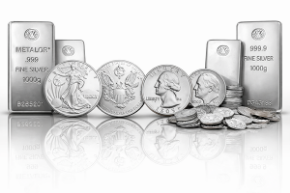

A Critical Shift in the Financial System
A major wealth transfer is underway, and most people are not positioned to benefit from it.
In this discussion, Lynette Zang and Kenneth Mraz break down what is happening beneath the surface of financial markets. While many investors remain focused on paper assets and short-term price movements, central banks are aggressively accumulating physical gold. This divergence signals a deeper structural shift that has significant implications for wealth preservation and financial freedom.
Understanding Market Extremes and the 200-Day Moving Average
Lynette begins by analyzing the 200-day moving average in both gold and silver markets. Historically, movements that exceed 10 percent above or below this average indicate extreme conditions.
At the time of this discussion:
- Spot gold remained approximately 13 percent above its 200-day moving average
- Spot silver was roughly 33 percent above its 200-day moving average
These levels suggest technically overbought conditions. However, Lynette emphasizes an important distinction. These are spot contracts, not physical metals. They are trading vehicles, and their pricing behavior does not fully reflect the underlying value of tangible assets.
To simplify the concept, she compares the 200-day moving average to a rudder guiding a ski boat. Prices may swing above or below, but they tend to revert toward that central trend over time.
Paper Markets as Tools of Perception Management
A key theme in this conversation is the role of paper markets in shaping investor behavior.
Lynette explains that gold and silver contracts were originally created by governments and Wall Street as tools of perception management. Their purpose is to influence how investors view value and risk.
Kenneth reinforces this point, noting that most people have been trained to trust these paper markets. However, dramatic price swings in contracts can:
- Create emotional reactions
- Push investors in or out of positions
- Discourage participation in physical ownership
This system benefits large institutions while keeping individuals from moving their wealth into assets that are outside of centralized control.
The Real Trend: Loss of Purchasing Power
According to Lynette, the most important trend is not stock market performance or even precious metals pricing. It is the decline in purchasing power of the currency.
Over time, the U.S. dollar has lost more than 97 percent of its purchasing power. This is the true measure of inflation, not the official numbers presented to the public.
She challenges the conventional narrative around inflation:
- Prices do not go back down
- Only the rate of increase may slow
- Official metrics are adjusted and manipulated
This creates a disconnect between reported inflation and real-world experience, reinforcing the importance of focusing on long-term purchasing power rather than short-term market movements.
Why Traditional Inflation Hedges Fall Short
When asked about Treasury Inflation-Protected Securities, Lynette is direct in her assessment.
She considers them ineffective because they rely on manipulated inflation data. While they are designed to adjust with inflation, they fail to truly preserve purchasing power.
This highlights a broader issue. Many traditional financial tools are built within the same system that is responsible for currency debasement.
Real Estate vs. Gold: A Coming Reversal
Another major topic discussed is the relationship between real estate and gold.
Lynette points out that for decades:
- Interest rates declined
- Home prices increased
This created the illusion of rising wealth. However, she argues that this was largely driven by monetary policy and currency devaluation.
Since 2022, rising interest rates have broken this long-term trend. As a result, she expects:
- A significant decline in real estate values
- A rise in the fundamental value of physical gold and silver
She references the 2008 housing crash, when home prices fell approximately 45 percent. While central banks intervened at that time, she questions whether they have the same tools available today.
The Strategy Behind Sound Money
Despite the risks, Lynette emphasizes the importance of having a place to live. Shelter remains a core component of any financial strategy.
However, she introduces a powerful concept tied to sound money strategies.
The idea is to:
- Acquire fixed-rate debt when necessary
- Repay that debt later with devalued currency
Kenneth expands on this, explaining that during currency resets, financial institutions restructure debt in their favor. Being positioned correctly allows individuals to benefit from this shift rather than suffer from it.
This creates what he calls an asymmetric payoff.
For example:
- A small amount of physical gold today
- Could potentially eliminate large amounts of debt in the future
The remaining gold then serves as preserved purchasing power and a foundation for building income-producing assets.
Why Central Banks Are Buying Gold
One of the most important insights from this discussion is the behavior of central banks.
While the public is encouraged to trade paper assets, central banks are:
- Accumulating physical gold at record levels
- Securing tangible assets outside the fiat system
This is not accidental.
Gold and silver are classified as sound money because they:
- Cannot be created out of thin air
- Have broad global demand
- Exist outside government control
As Kenneth explains, physical gold is used in more than 30 sectors of the global economy, while silver has even broader industrial applications. This intrinsic demand reinforces their role as true stores of value.
Wealth Never Disappears. It Shifts.
Lynette delivers a powerful reminder.
Wealth does not vanish. It simply moves.
Historically, it has flowed toward the top 1 percent. However, this transition period presents an opportunity for individuals to reposition themselves.
By focusing on:
- Tangible assets
- Physical gold and silver
- Community and essential resources
It becomes possible to participate in this wealth transfer rather than be negatively impacted by it.
Final Thoughts: Preparing for What Comes Next
The financial system is undergoing a structural transformation. Paper markets continue to dominate headlines, but the real movement is happening behind the scenes.
Central banks are securing physical gold. Purchasing power continues to erode. Traditional financial instruments are failing to deliver true protection.
This is why sound money strategies centered on tangible assets are more important than ever.
Take Action Now
If you want to protect your wealth and position yourself for the coming shift, it is essential to understand how physical gold and silver fit into a comprehensive strategy.
Visit Zang International to learn more about sound money strategies and how to safeguard your financial future with physical gold and silver before the next phase of this wealth transfer accelerates.

