

Money by Decree Isn’t Real Money
So much of what the public hears about the economy is spin. At Zang Enterprises, the goal is to cut through that spin and get to the truth. One of the most misunderstood topics in finance is the difference between currency and money. At first glance, they seem interchangeable. They are not. That difference determines whether your wealth survives.
Emerald Fox breaks down why fiat currency is not real money and why sound money has endured for thousands of years.
Currency vs. Money: A Critical Distinction
Currency is what we use every day. Cash in your wallet. Digits in your bank account. The tap or swipe of a card. Currency is a tool of exchange. It makes trade possible.
But currency does not store value.
Currency leaks purchasing power over time.
Purchasing power is what your money can actually buy. A gallon of milk that once cost fifty cents now costs several dollars. The number of dollars may look the same, but what they buy continues to shrink as more currency is created.
Money is something entirely different.
What Real Money Does That Currency Cannot
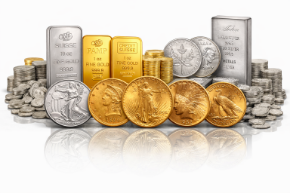
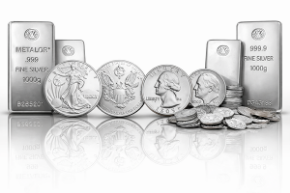
Real money holds value over time. It carries trust across centuries, empires, and civilizations. Gold and silver are money not because a government declared them to be, but because their value is intrinsic.
Intrinsic value is the true underlying worth of an asset, not its market price or perceived value. Gold and silver possess that value on their own. They do not rely on confidence in a system or faith in policy.
Fiat Currency Explained: Value by Decree
Most of what we use today is fiat currency. The word fiat comes from Latin, meaning “let it be done” or “by decree.” In economic terms, it describes something that exists not because it has intrinsic value, but because an authority commands it.
Fiat currency holds value only because a government says it does. It is not backed by tangible assets like gold or silver. The dollar, the euro, and the yen are all fiat currencies. Their worth comes from decree, not from reality.
The Turning Points: 1933 and 1971
Two key moments severed the connection between the US dollar and real money.
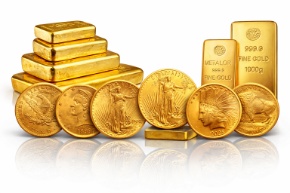
In 1933, Americans lost the right to redeem dollars for gold under Executive Order 6102. Citizens were forced to turn in most gold at $20.67 per ounce, with limited exceptions for jewelry, industrial uses, and rare collectible coins such as pre-1933 US gold coins. Soon after, gold was revalued to $35 an ounce, instantly devaluing the dollar by nearly 70 percent.
In 1971, President Richard Nixon closed the gold window. Foreign governments could no longer redeem US dollars for gold. From that moment forward, the dollar became a pure fiat currency backed by nothing tangible, only government decree and public trust.
History is clear. Every fiat currency eventually fails. Governments print more, debase the currency, and trust erodes.
Sound Money 101: Why Gold and Silver Endure
Sound money is backed by something tangible, scarce, and universally trusted. Gold and silver meet every requirement:
- Durable
- Divisible
- Portable
- Consistent
- Scarce
- Intrinsically valuable
This is why gold and silver have outlasted every fiat experiment in history.
The bottom line is simple. Currency is what you spend. Money is what you save. Fiat currency is value by decree. Sound money is value by reality.
Legal Tender Shifts: States Bring Back Gold and Silver
Today, eleven US states representing roughly 22 percent of the country have passed laws recognizing gold and silver as legal tender.
Legal tender is what the government officially recognizes for payment of debts and taxes. At the federal level, only paper dollars and US Mint coins qualify. Gold and silver are still treated as commodities.
State laws recognizing gold and silver as money push back against a system built entirely on fiat. That momentum is growing.
Inflation Is Theft of Your Economic Energy
More than half of Americans live paycheck to paycheck with less than $1,000 saved. Every time more currency is printed, those paychecks buy less.
That is inflation.
Inflation is theft. It confiscates your work, your savings, and your economic energy. Economic energy is the time, effort, and skill you trade for income. When inflation erodes currency, the energy you spent earning those dollars loses value.
Gold and silver cannot be printed. They preserve purchasing power.
A Global Movement Toward Sound Money
The push for sound money is not isolated. Lynette Zang recently spoke with Daniel Diaz, executive director of Citizens for Sound Money, an organization dedicated to advancing real money legislation and protecting the public’s right to preserve wealth.
Following state-level sound money legislation in the US, international interest surged, with inquiries coming from Ireland, Germany, the UK, and Australia. The world is paying attention.
The Takeaway
Sound money is not optional. It is essential.
Fiat currencies collapse. Sound money survives.
At Zang Enterprises, we help people build sound money strategies using physical gold and silver to protect purchasing power and financial freedom. You do not have to navigate this alone.
Connect with one of our specialists to design a sound money strategy that fits your goals, your family, and your future. Learn how tangible assets can support wealth preservation and economic collapse preparation in an increasingly unstable financial system.

