


The Hidden Cost of Credit Card Perks
Many people believe credit card rewards are free money. But in reality, these perks come at a cost and it’s not the banks paying for it.
When reward points were introduced, transaction fees for small businesses doubled from around 1.5% to 3%. Small business owners couldn’t absorb that increase, so they had no choice but to pass it on to consumers quietly adding a quarter here and a quarter there into the price of goods.
The banks profited. Businesses and consumers paid the price. Nothing is free.
Tariffs, Inflation, and the Retail Doom Loop
Tariffs are compounding the problem. Large corporations may weather the storm, but small businesses can’t. Their only option is to raise prices, and once again, the consumer pays.
- Goods become more expensive.
- Governments collect more taxes due to inflated prices.
- Businesses cut benefits like discounted shipping.
- Choices shrink as retailers stock less inventory.
This cycle creates what Lynette Zang describes as the “retail doom loop.” Businesses buy less, consumers buy less, choices shrink, and the economy spirals downward. It doesn’t look like a vibrant economy it looks like one headed for collapse.
The Cashless Trap
More and more businesses are charging extra fees for using credit cards. Every swipe enriches the banks. Debit cards were pitched as “free” when they first appeared, but small businesses still had to pay swipe fees.
The reality: nothing is free. The more the system shifts to cashless transactions, the more wealth is siphoned from local communities to banks and corporations.
As Lynette reminds us: “Freedom is not free. Integrity is not convenient. But we have to stand in our power to take our power back.”
The Middle Class Collapse and Debt Slavery
The decline didn’t happen overnight. Since 2000, small businesses have been systematically pushed aside while giants like Amazon were positioned to dominate. The result has been devastating.
- The middle class is vanishing.
- “Buy now, pay later” schemes are everywhere, trapping people in debt.
- Debt slavery has become the norm.
Recent statistics show that 60% of Americans now have negative net worth. For many, financial freedom has disappeared, replaced by dependency on credit and unstable fiat currency.
Government Money Is Designed to Lose Value
Central banks are at the core of this system. Every time new money is created, the value of existing dollars, euros, yen, or yuan drops. Government-based money is built to depreciate.
When consumers can’t consume, businesses suffer. Even large companies are retreating closing storefronts, consolidating into warehouses, and abandoning retail spaces. The writing is on the wall: the system is breaking.
The Stablecoin Danger
A new layer of control is emerging: stablecoins. Large corporations and big banks like Amazon, Walmart, and JP Morgan are positioning themselves to issue their own digital currencies.
At first, they will lure people in with perks. Once inside their ecosystems, consumers will be rewarded for staying there but trapped in closed systems where freedom and choice are stripped away.
The illusion of convenience hides a dangerous reality: by accepting these incentives, people limit themselves and surrender financial independence.
Why Gold and Silver Are the Exit Strategy
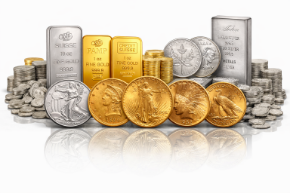
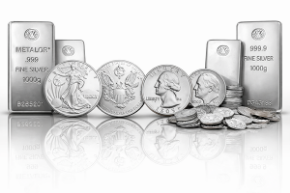
In contrast, gold and silver represent freedom. They are tangible assets outside of the banking system and immune to government depreciation and corporate traps.
One speaker shared how they have become their own central banker:
- Precious metals are set aside for their daughter.
- Gold funds their grandsons’ college accounts instead of fiat dollars.
- The younger generation is learning about sound money instead of debt slavery.
This isn’t abstract. It’s practical wealth preservation that builds real financial security for future generations.
And the benefits are clear: “I sleep really well at night. I work now because I choose to work.”
Sound Money Strategies: A Personalized Path
Adopting sound money strategies isn’t one-size-fits-all. The foundation tangible assets like physical gold and silver is the same, but every family’s goals and needs are different.
Key considerations include:
- Choosing the right types of gold and silver.
- Knowing when to sell.
- Planning what to convert assets into as part of an exit strategy.
- Ensuring diversification to stay protected in all phases of the cycle — even outside of hyperinflation.
As Lynette emphasizes: “Get yourself positioned in sound money because if you’re positioned there, you can do everything else.”
Final Thoughts
What looks like convenience credit card perks, cashless payments, stablecoins is actually a trap designed to erode wealth and strip away freedom. Tariffs and inflation add even more strain, creating a retail doom loop that pushes both businesses and consumers toward collapse.
But there is a way out. By adopting sound money strategies with tangible assets like physical gold and silver, you can break free from debt slavery, preserve wealth, and create real financial freedom for yourself and future generations.
Now is the time to prepare. Learn how Zang Enterprises’ sound money strategies can help you protect your wealth, preserve your financial freedom, and prepare for the future with physical gold and silver.

