

Texas Launches the First Sovereign Bullion Supply Chain
Texas has just taken a historic step by becoming the first U.S. state with a fully sovereign bullion supply chain.
According to Lynette Zang, this is significant because Texas has moved beyond simply storing precious metals. The state now has a system that manufactures, distributes, and vaults gold and silver through a state-run infrastructure.
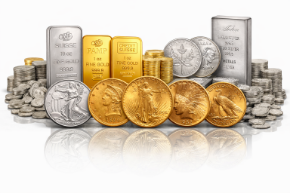
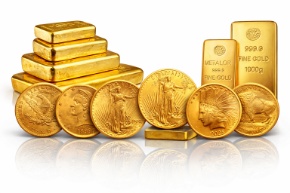
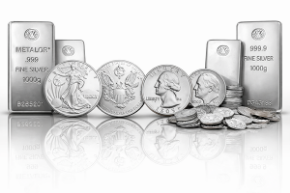
This means citizens in Texas can now purchase state-branded physical gold and silver directly from a government storefront and store it in the Texas Bullion Depository. The system bypasses commercial banks and creates a state-level alternative to federal monetary rails.
While this development is noteworthy, Lynette Zang explains that the bigger issue behind the headlines is something far more fundamental to the financial system: liquidity.
Understanding Liquidity and the Illusion Behind It
Liquidity is the ability to easily buy or sell an asset without dramatically affecting its price. In a healthy financial system, liquidity allows markets to function smoothly.
However, Lynette Zang emphasizes that much of today’s financial system operates on what she calls illusions of liquidity.
To illustrate this concept, she references a liquidity pyramid that shows the structure of global assets. At the top of the pyramid are complex financial instruments that appear liquid but are often built on layers of leverage and speculation.
The deeper investors look into this structure, the clearer it becomes that the largest risks may not be visible at first glance.
Derivatives: The Hidden Threat to Financial Stability
At the very top of this pyramid sit derivatives, which Lynette Zang describes as one of the biggest threats to the entire financial system.
Derivatives are financial contracts whose value is derived from another asset. While they were originally created as tools for risk management, many derivatives today function primarily as leveraged bets.
Importantly, these contracts cannot always be converted into the underlying asset they reference.
Current reports estimate that global derivatives have a notional value of approximately $714 trillion. However, Lynette Zang explains that this figure represents a netted value after accounting adjustments.
According to the same reporting, a netting benefit of roughly 88.4 percent is used to reduce the apparent size of these positions.
Based on this data, Lynette Zang estimates that the total contract value behind these derivatives could potentially reach $616 quadrillion. Even that staggering number does not fully reflect the actual risk if these positions begin to unwind.
After more than fifteen years of zero interest rate policies, she warns that many of these derivatives are already underwater, placing the entire structure under significant stress.
Financial Engineering and Securitized Debt
Another major layer in the liquidity pyramid is securitized debt and stocks.
Securitization occurs when debt is bundled into financial products and sold to investors. For example:
- Credit card debt
- Bank loans
- Mortgage payments
These obligations are transformed into tradable assets.
In this process, one person’s liability becomes another person’s asset. While this financial engineering can make markets appear stable and profitable, it is still fundamentally built on debt.
As Lynette Zang notes, headlines warning that federal debt is approaching crisis levels are misleading in one key way. In her view, the crisis is already here.
The Debt Bubble and the Fiat System
According to Lynette Zang, the debt bubble has effectively already burst.
The problem is that the majority of financial assets today exist as intangible fiat money instruments tied to that debt structure. These assets ultimately derive their value from currency systems that have been inflated through extensive money printing.
This leads to what she calls the currency illusion.
Physical U.S. currency in circulation is estimated to be around $2.3 trillion, yet even this tangible form of fiat money struggles to maintain purchasing power over time.
Examples from other countries, such as extremely high-denomination banknotes that buy very little, illustrate how quickly currency can lose value.
The Foundation of the Financial Pyramid
At the very base of the global financial system sits a much smaller foundation: physical gold and silver.
Unlike fiat currency or financial derivatives, the supply of these metals is finite. According to Lynette Zang, the entire financial pyramid ultimately rests on this limited base of tangible assets.
If the upper layers of the pyramid begin to implode, the true fundamental value of physical gold and silver could become dramatically more apparent.
She stresses that the risks investors can see are only part of the picture. The greater danger may lie in the areas of the system where transparency is limited and visibility is poor.
Hedging vs. Speculation in Derivatives Markets
Derivatives were not always speculative instruments.
Originally, they served a practical purpose for producers and businesses. For example, a farmer expecting to harvest a crop months in the future might sell a futures contract to lock in a price and protect against the risk of crop failure.
This type of use is considered hedging, and it provides legitimate risk management.
However, much of the derivatives market today is driven by speculation rather than real economic activity. Large financial institutions create complex contracts that are traded purely for profit rather than protection.
The massive numbers attached to these markets can obscure the underlying risks.
Wall Street and the Casino Economy
Lynette Zang compares today’s financial markets to a casino.
Historically, wealth was built through productive work and the creation of real value. But easy money policies, expanding credit, and speculative trading have encouraged a different mindset.
Governments inflate the money supply, extend credit, and manipulate policy decisions in ways that influence market behavior. This environment creates asset bubbles that can make speculation appear easier than productive work.
When these bubbles expand, they can give the illusion that wealth is being created effortlessly.
But when they burst, the consequences can be severe.
Sound Money vs. Fiat Currency
At the core of Lynette Zang’s message is a clear distinction between sound money and fiat currency.
Physical gold and silver represent sound money because their supply is limited and they cannot be created at will. Fiat currency, by contrast, can be expanded endlessly through government and central bank policies.
The easier and cheaper it becomes to create money, the more currency enters the system. As the supply grows, the value of that currency declines.
This dynamic affects everything from stock markets to cryptocurrencies to precious metals spot prices.
Seeing the System Clearly
Lynette Zang encourages investors to look beyond short-term market movements and recognize the broader structure of the financial system.
Volatility in markets is not just about rising or falling prices. It reflects deeper instability in a financial bridge that is swaying under the weight of excessive debt, leverage, and speculation.
Understanding these dynamics can help investors avoid being trapped within a fragile system.
Prepare with Sound Money Strategies
The financial system is undergoing significant changes, and understanding how liquidity, debt, and derivatives interact is essential for protecting wealth.
Sound money strategies that include tangible assets like physical gold and silver can play an important role in wealth preservation, financial freedom, and preparation for potential economic disruption.
If you want to learn how to position yourself outside of the most fragile parts of the financial system, explore Zang International’s sound money strategies and discover how physical gold and silver can help safeguard your financial future.

