


As the U.S. government considers building a reserve of seized cryptocurrencies, Lynette Zang sounds the alarm on what this means for your wealth, your choices, and the future of money.
What Is the U.S. Crypto Reserve and Why Should You Care?
Lynette opens with a blunt truth. The federal government is evaluating the creation of a national digital asset stockpile, using cryptocurrencies seized through law enforcement actions. By far, the largest portion of this digital stash is Bitcoin, followed by stablecoins like Tether.
On the surface, managing these assets may sound reasonable. But Lynette warns there is a big difference between a stockpile and a reserve. A stockpile suggests passive accumulation. A reserve suggests intention to use. That distinction matters.
She stresses that any government initiative like this is never neutral. It is vital to ask who benefits most.
Political Endorsements and Market Manipulation
Former President Trump recently named Bitcoin, Ethereum, XRP, Solana, and Cardano as cryptos to include in this reserve. This announcement alone caused global crypto markets to surge by over $300 billion in just three hours.
Lynette questions whether any asset so reactive can truly serve as the foundation for a sound money system.
She points out the crypto market’s roots trace back to Bitcoin’s 2009 launch. Yet government agencies like the NSA had explored similar ideas as far back as 1996. That long-standing interest raises red flags. Could crypto be a Trojan horse designed for control rather than freedom?
Why Real Gold Still Matters
The comparison between Bitcoin and gold is everywhere, and Lynette does not shy away from addressing it. She holds up a gold coin and a physical Bitcoin token and reminds viewers, “This is not gold.”
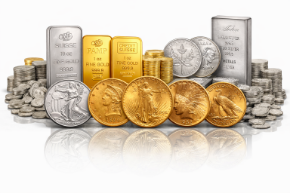
Graphics and PR campaigns might paint Bitcoin as “digital gold,” but Lynette is clear. There is no substitute for real, physical gold. It is used in every sector of the global economy and carries no counterparty risk. It is time-tested and truly decentralized.
She also highlights an important trend. Central banks are buying more gold now than at any time since tracking began in 1950. This includes the years leading up to the 2008 financial crisis. Central banks know what is coming. They are not guessing. They are preparing.
Crony Capitalism and the Influence Game
Ripple, a leading crypto company, recently contributed $75 million to a super PAC supporting Trump’s 2024 campaign. At the same time, Ripple is still fighting an SEC lawsuit over unregistered securities.
Lynette calls this what it is: crony capitalism. Large donations open political doors and shape regulations. That is how the game is played, whether we like it or not.
Even within the sound money movement, supporters have to fight to get politicians' attention and gain legal recognition for state-backed bullion vaults and legal tender laws.
DeFi, Deregulation, and Dangerous Gaps
U.S. lawmakers are also challenging the IRS broker rule that imposes reporting requirements on decentralized finance (DeFi) platforms. Lynette points out that this deregulation reduces consumer protection and increases public risk.
When DeFi platforms like Synapse collapse, customers often discover too late that FDIC insurance does not cover financial tech firms. Deposits vanish, and the regulators walk away. At last count, over $65 million from Synapse users remains unaccounted for.
This is a stark example of how regulatory gaps leave everyday users exposed. These are not isolated events. They are signs of a fragile and increasingly experimental system.
A Volatile Market Signals Urgency
Lynette turns to market data showing sharp declines in major indices like the NASDAQ, S&P 500, and Dow Jones. Treasury yields are dropping too, not because the economy is strong, but because weakness is spreading.
When markets fall, especially for those trading on margin, forced liquidations follow. Even gold and silver can experience short-term drops when investors are forced to sell to cover losses.
But none of this reflects gold’s true fundamental value. Gold remains the cornerstone of financial stability, while cryptocurrencies continue to serve largely as tools for speculation.
Take Control Before You Lose All Choice
Lynette closes with a powerful reminder. In 2007, she warned that “something very nasty” was coming. By the time the 2008 crisis became visible to the public, it was too late.
The same thing is happening now. Public confidence is holding this system together, but that confidence is rapidly eroding.
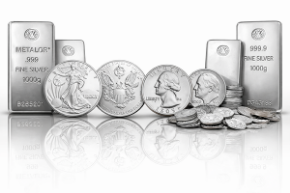
Build your sound money strategy. Become your own central banker. Secure your wealth with physical gold and silver. And do it before the next crisis removes your freedom to choose.
Final Call to Action
If you are feeling anxious about where this is all heading, take the first step toward true financial freedom. Schedule a free consultation with one of our strategy specialists and start building your own sound money strategy using physical gold and silver. Do not wait until the system makes your choices for you.

